The Magic of Light in Jewelry Display: 5 Illumination Techniques to Make Your Showcase Irresistible

In the world of luxury jewelry retail, lighting is not just illumination—it is a sales tool. Poor lighting can make a diamond look dull and a gold piece appear lifeless. The right lighting, however, can transform an ordinary showcase into a stage where each piece of jewelry becomes the star. Drawing on professional lighting standards and real-world case studies from leading jewelry showrooms, here are 5 essential techniques to elevate your jewelry displays.
1. Choose the Right Color Temperature for Each Material
Different jewelry materials “speak” different lighting languages. One of the most common mistakes in jewelry display is using a one-size-fits-all color temperature. For optimal results, match the color temperature to the specific material:
|
Jewelry Type |
Recommended CCT |
Why |
|
Gold / Yellow Gold / Rose Gold |
2700K – 4000K |
Warmer tones enhance the rich, lustrous quality of gold, preventing it from looking “washed out” or greenish. |
|
Diamonds / Platinum / White Gold |
4000K – 5000K |
Cooler, crisp light brings out the brilliance, fire, and sparkle of diamonds, emphasizing their facets and clarity. |
|
Jadeite / Emeralds / Gemstones |
4500K – 5700K |
This range makes the “water” (translucency) of jadeite appear fuller and the green of emeralds more vivid. |
Pro Tip: In luxury settings like the Radcliffe Jewelers showroom in Baltimore, color temperatures vary by display case, tailored specifically to the merchandise inside. This creates a dynamic journey for the customer’s eye and avoids the “flat” look of evenly lit spaces.
2. Master the 45-Degree Angle Rule
The angle of your light is as important as its color. Direct, overhead light can create harsh shadows and unflattering reflections.
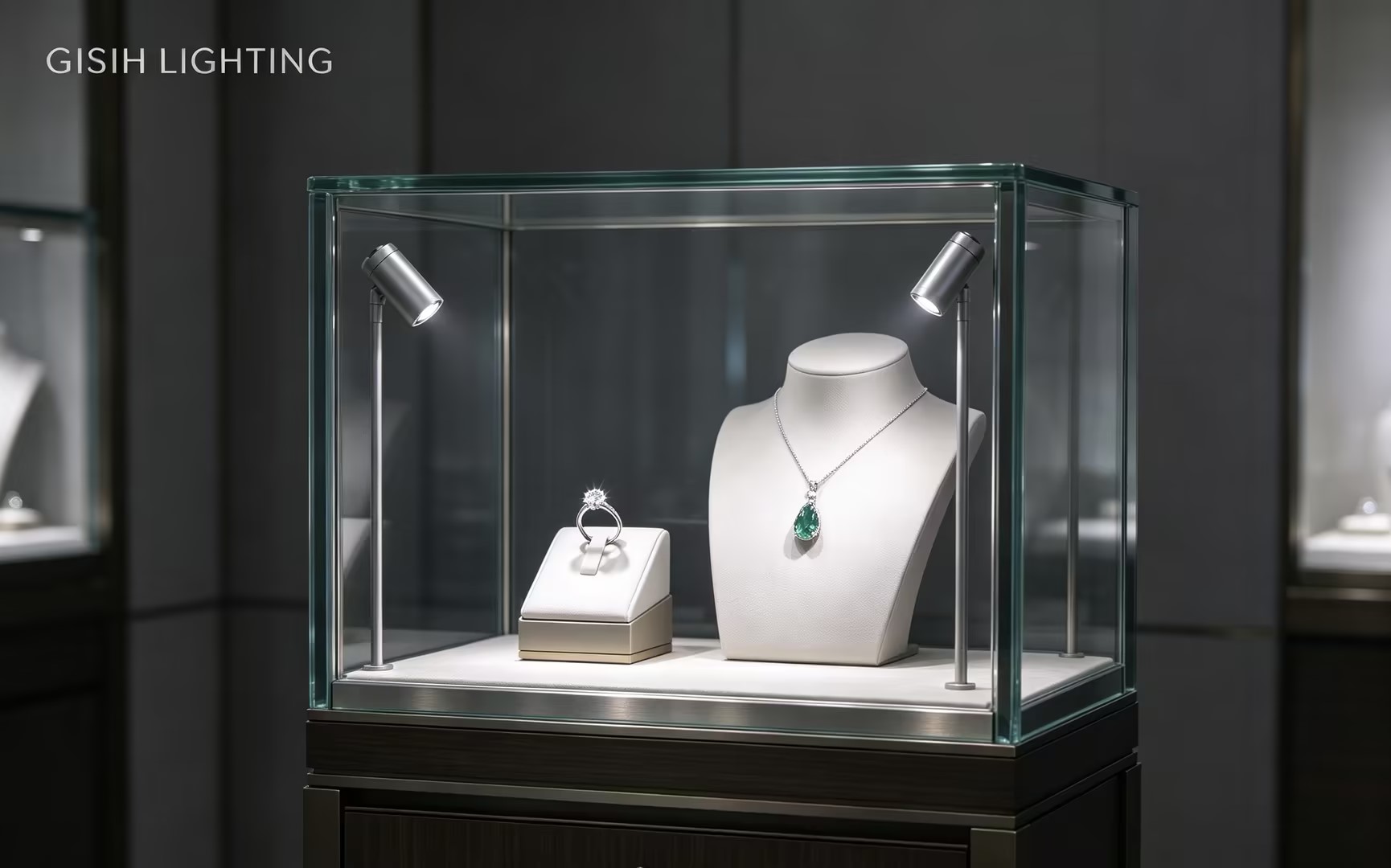
The industry standard for showcase lighting is the 45-degree angled spot. By positioning spotlights 15-20cm from the top of the display case at a 45-degree angle, you ensure that the light reflects evenly off the surface of the jewelry—creating a uniform sparkle without blinding the customer.
For more advanced setups, consider these techniques:
Side-mounted LED strips (<1cm wide): Concealed on the inner edges of the showcase, these provide soft, diffuse light that illuminates the bottom and sides of the jewelry, preventing the “black bottom” effect common with only top lighting.
Up-lighting: For tall displays or large pieces, low-voltage LED floor lights can create a dramatic “floating” effect, adding depth and dimension to the jewelry.
3. Layer Your Lighting: General + Accent + Task
A professional jewelry showroom uses three layers of light to create an immersive experience:
Ambient (General) Lighting: This is the background light that sets the mood. For a luxury boutique that encourages customers to linger, a warm, soft ambient light (around 3000K) creates a welcoming, intimate atmosphere. In contrast, stores with faster turnover may opt for cooler, brighter ambient light.
Accent (Focal) Lighting: This is where your track lights and spotlights come in. Use them to highlight hero products, creating a “focal point” that draws the customer’s eye. The target illuminance for your center items should be 800-1200 Lux—about 30% brighter than the surrounding area.
Task Lighting: For areas where staff interact with customers (e.g., viewing trays, consultation counters), use glare-free, high-CRI light to ensure accurate color evaluation.
The award-winning Walker Luxury Jeweller in Dundee used this exact strategy: ambient lighting softens the space, while spotlighting within bespoke display cases adds focus and drama. Notably, they used interior light to spill out onto the street, drawing customers in from the outside.
4. Never Compromise on Color Rendering (CRI ≥ 93)
A high Color Rendering Index (CRI) is non-negotiable. CRI measures how accurately a light source reveals the true color of an object. In jewelry, this is everything.
Minimum Standard: For professional jewelry display, a CRI of Ra ≥ 90 is the absolute baseline.
Premium Standard: For high-end diamonds and gemstones, aim for CRI ≥ 93, and ideally ≥ 97. This level of color accuracy ensures that a diamond’s fire is not lost and a ruby’s red is rich and authentic, not muddy or grey.
5. Eliminate Glare and UV Damage
Your lighting should enhance the jewelry, not distract the customer with glare or damage the product.
Tackle Glare: Glass showcase fronts are notorious for reflections. To solve this:
Adjust spotlights to a 30°–45° tilt to minimize direct reflections in the glass.
Use accessories like honeycomb grids (louvres) or polarized lenses on your spotlights to control the beam and reduce spill light that bounces off the glass.
Consider adding a diffuser film to the top of the showcase to soften hard shadows.
Block UV & IR Radiation: Jewelry, especially gemstones and pearls, can be damaged by ultraviolet and infrared radiation. Ensure your LED fixtures are UV-free and IR-free to protect your valuable inventory from discoloration and heat damage over time.
Conclusion
Professional jewelry lighting is a strategic investment that directly impacts customer dwell time, product perception, and ultimately, sales. By choosing the correct color temperature, mastering lighting angles, layering your light sources, ensuring high CRI, and controlling glare, your display cabinets can become captivating stages that transform every piece of jewelry into a masterpiece.
Ready to upgrade your showcase lighting? Contact our team to explore our range of high-CRI, museum-grade track lights, spotlights, and LED strips designed to bring out the best in your products.
Mini Track Spotlights for Professional Mineral Specimen Display Lighting
2026 Vertical LED Spotlights: Decoding the Three Core Industry Trends
Related Article